 Ganadeep
What is Nepalese pashmina?
Pashmina takes its name from pashm, the Persian word for wool. In Nepal it describes something very specific: the fine, soft undercoat of the Chyangra, the Himalayan cashmere goat, which is gathered in the high mountain districts, spun into yarn and woven or knitted into shawls, stoles, scarves, fabrics and blankets.
Nepal has produced pashmina for generations, and today Nepalese pashmina is exported to boutiques, private buyers and fashion houses across Europe, the USA, Japan, Switzerland and South Africa. What buyers look for is the same quality that has always defined it: remarkable softness, very little weight and real warmth.
The Chyangra goat and the Himalayan fibre
The Chyangra lives and grazes at high altitude, where winters are severe. To survive the cold it grows a dense, ultra-fine layer of down beneath its coarser outer hair. That undercoat is pashmina. Its fibres are typically only around 12 to 16 microns thick, far finer than a human hair, which is why a genuine pashmina shawl can feel almost weightless while still holding heat.
Each spring, as the weather warms and the goat naturally sheds, the down is gathered by combing rather than shearing. A single animal gives only a small amount each year, which is one reason real pashmina is a precious material and not a commodity.
To protect buyers from imitations, Nepal introduced the Chyangra Pashmina certification mark, which identifies genuine hand-made Himalayan pashmina and sets it apart from cheaper products sold under the same name.
How pashmina is made by hand in Nepal
Making a genuine shawl is slow, careful work, and every stage leaves its mark on the finished piece:
- Collecting and cleaning. The combed down is sorted and the coarse guard hair is picked out by hand, leaving only the finest fibre.
- Spinning. The fibre is spun into yarn. Hand spinning gives the thread the slightly uneven, living character that machine yarn lacks.
- Weaving or knitting. The yarn is woven on traditional looms into shawls and stoles, or knitted into soft, close-fitting garments. Ganadeep works in both techniques.
- Dyeing. Colour can be added with natural or modern dyes, or the fibre can be left in its natural undyed shades.
- Finishing. The piece is washed, pressed and, where requested, hand-embroidered before it leaves the workshop.
You can see this process in more detail on our weaving and knitting pages.
Pashmina vs cashmere: what is the difference?
Pashmina is a form of cashmere, so the two are closely related, but they are not always the same thing in the marketplace. Cashmere is the broad term for the soft undercoat of cashmere goats. Pashmina traditionally refers to the finest grade of that fibre, from goats living at the highest altitudes, usually hand-spun and hand-woven.
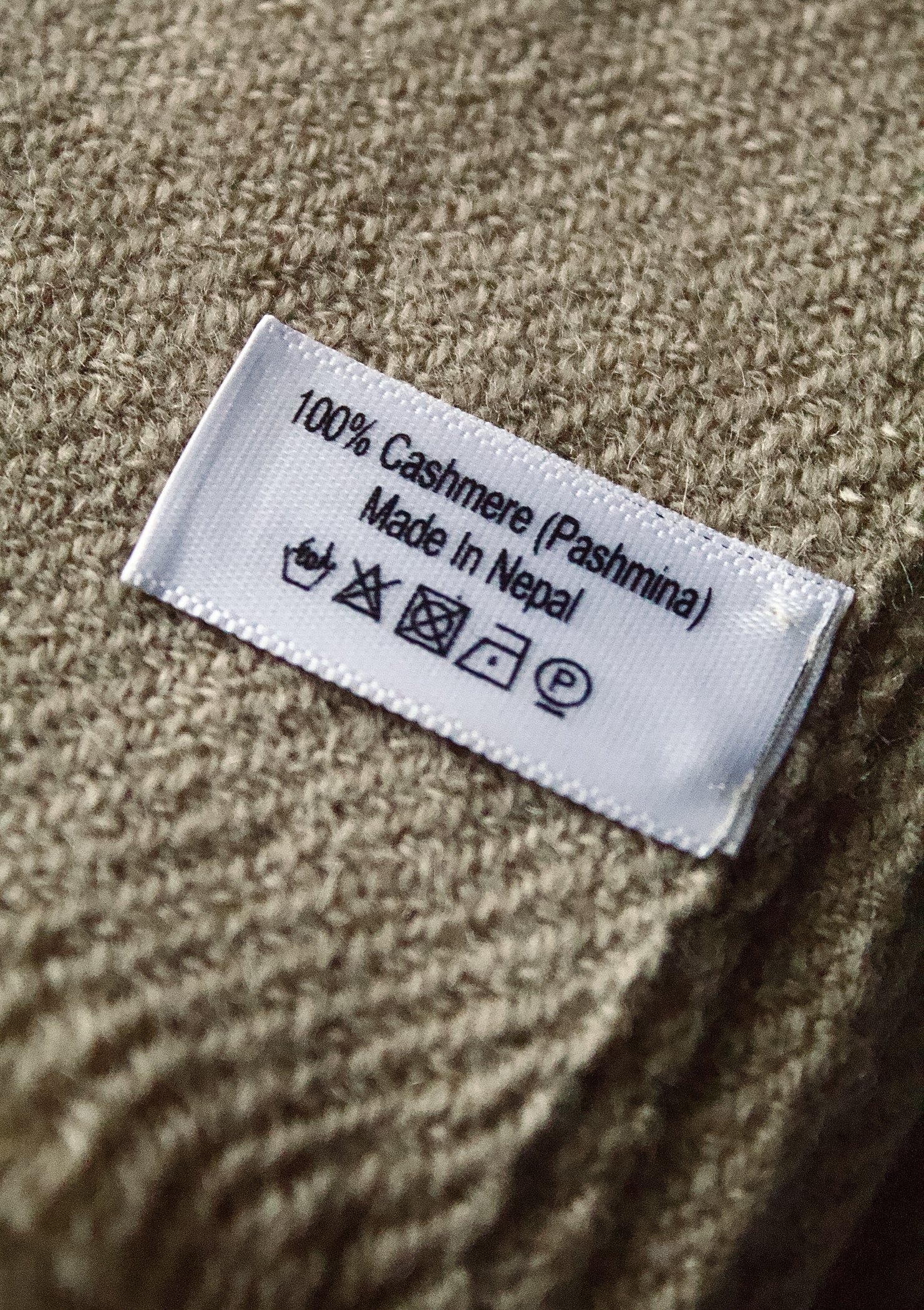
The confusion comes from the word being used loosely. Many inexpensive scarves labelled “pashmina” are actually viscose, silk-blend or acrylic. A label that states the exact fibre content, such as 100% Cashmere (Pashmina), and names the country of origin is where trust begins.
How to spot genuine pashmina
- Read the label. It should state the fibre percentage and origin. Vague wording like “pashmina style” is a warning sign.
- Look at the weave. A hand-woven shawl has a subtle irregularity. Perfectly uniform, shiny fabric is often synthetic.
- Feel the hand. Real pashmina feels soft, warm and light, and it warms up quickly against the skin. Synthetics feel slick or scratchy and stay cool.
- Do a careful burn test. If you can safely test one loose thread from the fringe, animal fibre burns slowly, smells like burnt hair and turns to a soft ash that crumbles. Synthetic fibre melts into a hard bead and smells of plastic.
- Check the certification and the seller. A Chyangra Pashmina mark and a manufacturer who can explain how the piece was made are the strongest proof.
- Be wary of a very low price. Hand-processed fine fibre cannot be sold cheaply.
Caring for your pashmina
Pashmina is delicate but durable, and with simple care a good shawl lasts for decades.
- Dry cleaning is the safest option. At home, wash in cool water with a mild wool or baby shampoo, press gently without wringing or rubbing, and rinse well.
- Roll the shawl in a clean towel to remove water and dry it flat in the shade. Never tumble dry, and never hang it wet.
- Fold it loosely for storage and keep it in a breathable cotton bag with a cedar block or lavender to deter moths.
- Light pilling is natural for fine fibre. Remove it by hand or with a cashmere comb, never with a razor.
Buying pashmina from a Nepal manufacturer
Buying directly from a manufacturer in Kathmandu means you know who made the piece, what it is made from and how it was finished. Ganadeep Pashmina Industry has been manufacturing since 1999 A.D., producing scarves, shawls, stoles, fabrics and blankets in pashmina, cashmere, silk and wool, using both knitting and weaving techniques. Our products have been exported to Europe, the USA, Japan, Switzerland and South Africa, and supplied to internationally recognised brands.
Whether you are a boutique looking for a reliable supplier, a brand developing a private-label collection, or a private buyer who wants a single exceptional shawl, we focus on quality, innovative designs, your requirements and current fashion trends. Browse our products or contact us to start a conversation.
Frequently asked questions
What is Nepalese pashmina?
Nepalese pashmina is the fine undercoat fibre of the Chyangra, the Himalayan cashmere goat, collected in Nepal's high mountain districts and then spun and woven into shawls, stoles, scarves and blankets. Genuine pieces carry Nepal's Chyangra Pashmina certification mark.
Is pashmina the same as cashmere?
Pashmina is a type of cashmere. Both come from the soft undercoat of goats, but the word pashmina is traditionally reserved for the finest, highest-altitude fibre, usually hand-spun and hand-woven. Many cheap scarves sold as pashmina are viscose or acrylic blends.
How can I tell if a pashmina shawl is genuine?
Check the label and fibre content, look for a slightly irregular hand-woven texture, and feel for a soft, warm, lightweight hand. A small fibre pulled from the fringe that burns slowly, smells like hair and crushes to a soft ash is animal fibre; one that melts into a hard bead is synthetic. A certification mark and a trustworthy manufacturer are the most reliable proof.
How should I wash a pashmina shawl?
Dry cleaning is safest. To wash at home, use cool water and a mild wool or baby shampoo, press gently without wringing or rubbing, rinse, roll in a towel and dry flat in the shade. Never tumble dry or hang a wet shawl.
Does Ganadeep supply pashmina wholesale or under private label?
Yes. Ganadeep Pashmina Industry has manufactured since 1999 A.D. and supplies international boutiques and fashion brands, using both knitting and weaving techniques. Contact us with your requirements for quantities, designs and fibre blends.